
Is the weakest point really awareness?
Fire prevention only works when people actually remember, understand and take part.
Project Zero is our work on one question: why does fire prevention slip, when everyone knows it matters? The direction is zero lives lost to fire.
In this article
01 Known, but not close
Most people agree that fire safety matters. Almost nobody thinks smoke alarms, escape routes, extinguishing equipment or routines can wait if the danger is concrete enough. Yet this is exactly what happens in everyday life: the risk is known, but it does not feel close.
Many people go through their whole lives without experiencing a serious fire up close.
“There has never been a fire here.”
That is not because people do not care. It is because fire prevention competes with everything else that is more urgent. A board meeting. A leak. A budget. A move. A busy working day. A report that should have been read. An instruction sitting somewhere in the operations and maintenance folder. When nothing is on fire, fire safety can become a subject people know is important, but do nothing about right now.
It is a human problem before it is a technical one.
And that is exactly why prevention has to be built for people.
02 Between the campaigns
Norway already does a great deal of good preventive work. DSB describes communication and attitude-building work as an important tool for preventing fire. Brannvernuka (Fire Safety Week), Røykvarslerdagen (Smoke Alarm Day) and Aksjon boligbrann are among the measures that build knowledge and awareness. This work should not be replaced by an app. Our question is what happens between these moments.
What happens three months after someone learned that the smoke alarm should be tested? What happens after the inspection report has been delivered? What happens when the board that ordered the risk assessment has been replaced? What happens when a deviation is understood but isn't urgent today?
Prevention has a particular challenge.
When it works, the result is often that nothing happens.
Everyday life, on the other hand, has an impressive ability to produce things that must be done right now.
In January 2026, DSB wrote that fire prevention must continue to be prioritised and strengthened through targeted cooperation between, among others, fire and rescue services, the electrical industry, the insurance industry, municipalities and authorities. It is a reminder that prevention does not happen by itself. It has to be organised, repeated and kept alive.
03 Where it actually happens
In homes, it can be about something as simple as knowing whether the smoke alarm can actually be heard from the bedroom with the door closed. In a housing cooperative, it can be about residents understanding why shared areas must not be used for storage. In a business, it can be about employees knowing what to do when the alarm goes off. In a commercial building, it can be about the tenant's use not slowly drifting away from what the building was assessed for.
04 Sent is not the same as done
All of this takes more than information. It takes participation.
Many systems treat people as recipients. They send an email, attach a document and hope the message has been understood. But in practice there is a big difference between information having been sent and someone having understood, confirmed and acted.
- Sent to 56Sent
- 32 taking partReplied
- 24 haven't repliedNo reply
In FireHub the board sees who has received the message, who has answered and who is still open.
Between sent and done there are several steps. The message has to be read. It has to be understood. The person who has understood has to confirm. And finally something has to actually be done.
For an owner, a board or a responsible manager, there is also a difference between believing everyone has been told and being able to see who has actually carried out a simple check or read an important instruction.
When participation is documented, responsibility also gets a better basis. Not as control for the sake of control, but as a practical overview. Have the residents received the instruction? Has the tenant confirmed its own routine? Has the deviation been closed with a measure, or just moved out of sight? Has the fire drill been carried out, or does it remain an intention?
05 Lowering the threshold without lowering the seriousness
It is about lowering the threshold without lowering the seriousness. A resident should not need to understand the whole regulation to know that the escape route must be kept clear. An employee should not need to read a long document to understand what the alarm means at their workplace. A board member should not have to become a fire expert to see which tasks are open, which measures are urgent, and who is following up.
Good prevention is often undramatic. It consists of everyday actions that work precisely because they happen before something goes wrong. That is why awareness is so important, and so difficult. It has to be maintained.
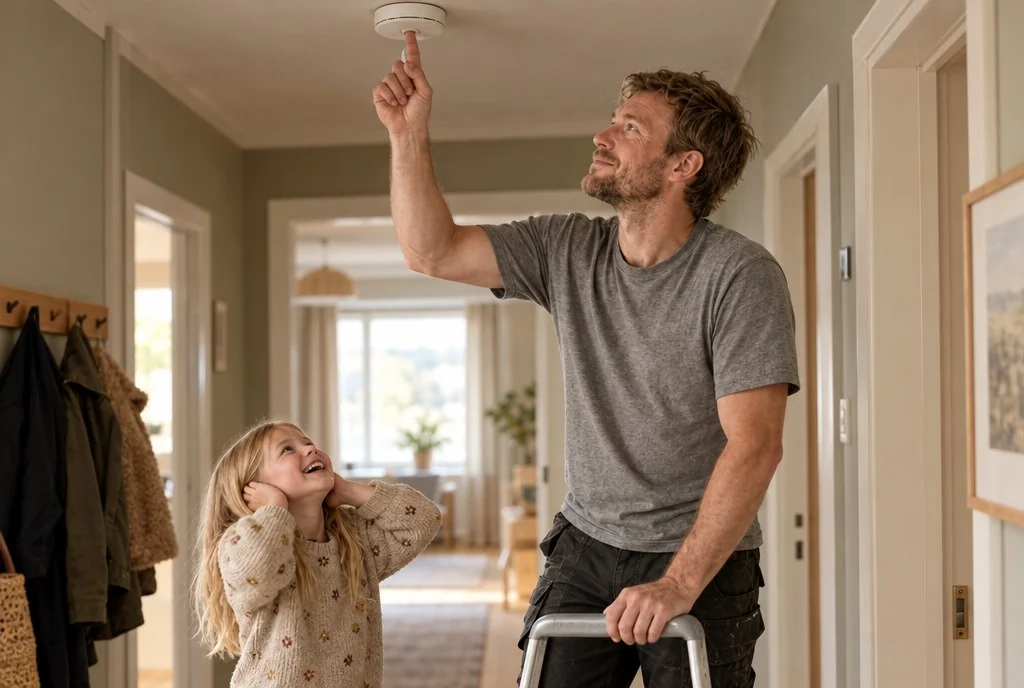
FireHub should make it easier to keep it alive. Not by moralising, but by making the right action more accessible. When people understand what to do, why it matters and how it will be followed up, prevention becomes less dependent on someone remembering the right thing at the right time.
Awareness is one part of the problem. The next question is what makes good actions easier to repeat.