Project Zero is our work on one question: why does fire prevention slip, when everyone knows it matters? The direction is zero lives lost to fire.
Points are not the point
FireHub Personal uses experience points, medals and visible progress. Not to turn fire prevention into a game, but because we want to find out whether small good actions can become easier to do, repeat and keep up.
FireHub Personal is a free app for fire safety at home. It shows what you should check, reminds you, and gives you a task when your building needs an answer.

In this article
Fire is frightening.
So it may seem a little odd to borrow tools from something many people associate with games.
Points.
Medals.
Levels.
Visible progress.
But the point is not to get people to collect as much XP as possible.
The point is what happens before the points arrive.
- You test the smoke alarm.
- You carry out a check.
- You learn something you can actually use.
- You spot a problem.
- You follow it up.
- You help someone else.
And perhaps you do it again the next time it is needed.
These are the actions we are interested in.
01 What we reward matters
A reward system can quickly get people to do exactly what the system rewards.
So the most important thing is not how many points something is worth.
The most important thing is what the points are actually meant to stand for.
In FireHub, the idea is not that you are rewarded because everything looks perfect.
Nor should you feel you have done something wrong because you found a problem.
If the smoke alarm does not work when you test it, it is valuable that you found out.
If a system makes it more attractive to answer «all fine» than to record what is actually there, the system has started to reward the wrong thing.
Honesty must never count against you.
It is the action that counts.
That you checked.
That you noticed.
That you followed up.
02 Knowing is not the same as doing
FireHub Personal includes quizzes and learning because what we know shapes what we notice.
If you do not know what a fire blanket looks like, it is harder to know where it is.
If you have never thought about where the escape route goes, you may not notice when something is in the way.
Knowledge matters.
But there is an important difference between:
knowinganddoing
That is why we care more about what knowledge leads to than about knowledge on its own.
A medal is not a certification.
A high points total is not proof that a home is safe.
Visible progress is only interesting if it points to something that actually matters in real life.
03 Progress should be allowed to feel like progress
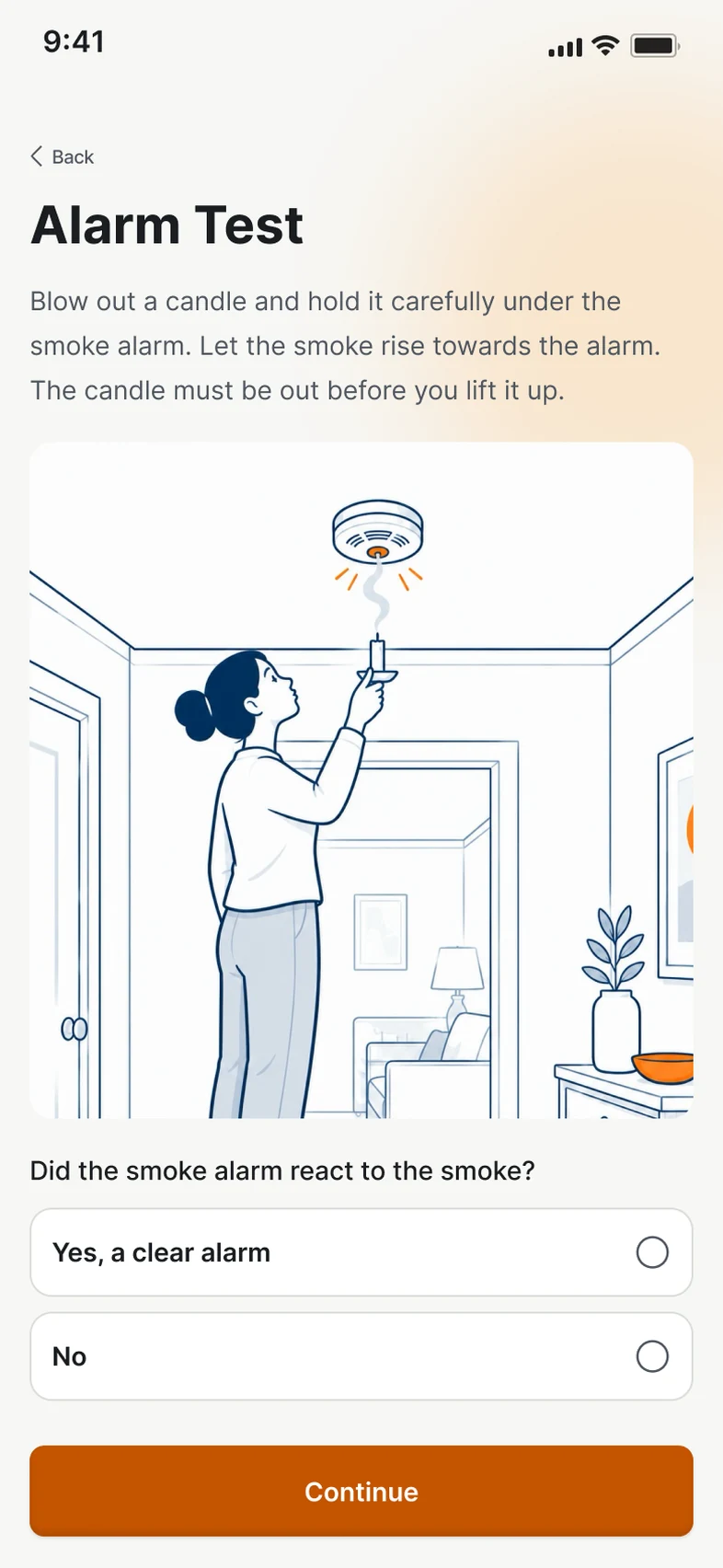
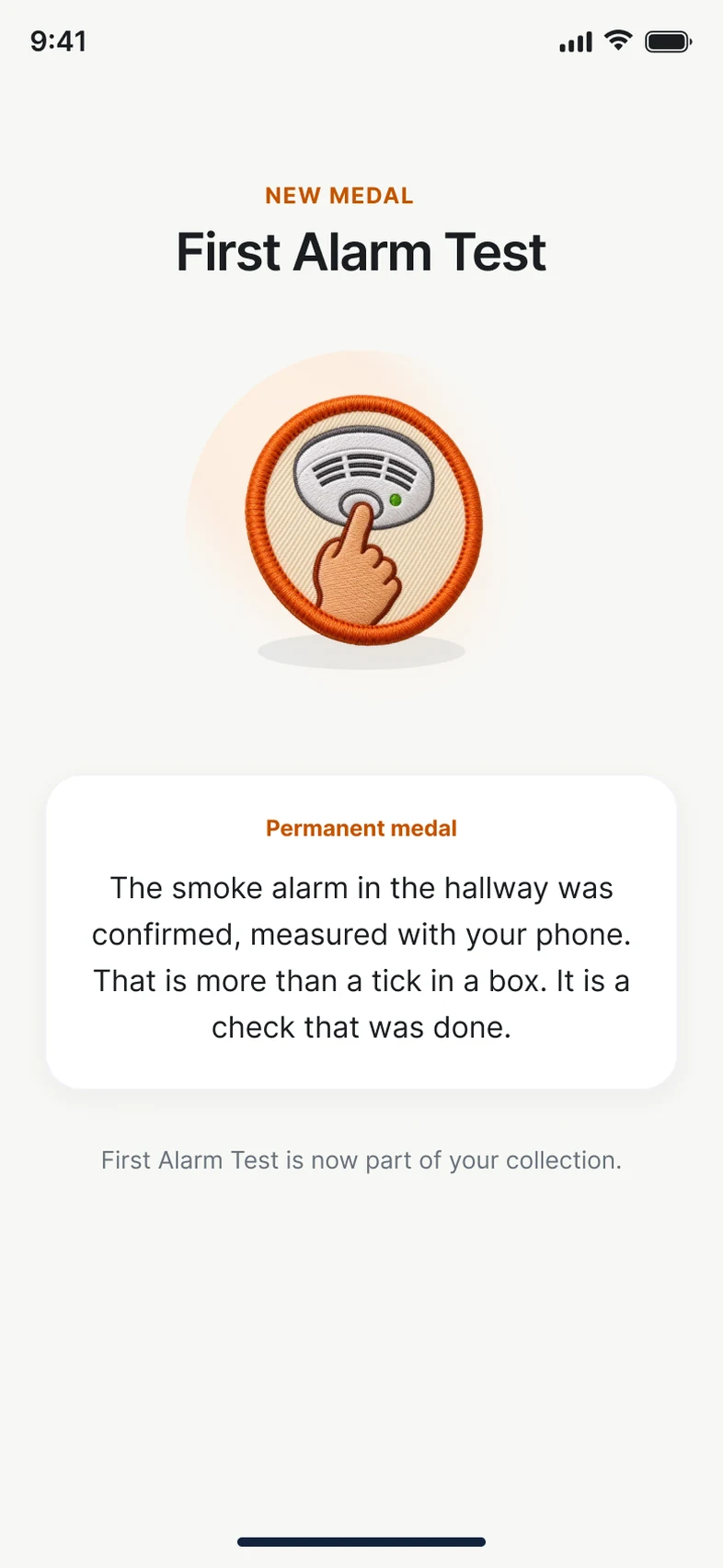
You actually tested the smoke alarm with smoke.
It took perhaps a minute.
It went off.
Everything worked.
And perhaps it felt a little good.
There is something particular about prevention.
When it works, the result is often that nothing happens.
No drama.
No big scene.
Just a small action that leaves something a little more in place than it was a moment ago.
That is where visible progress can play a part.
Not as payment.
Not as proof that you are better or safer than anyone else.
But as a small piece of feedback:
You actually did this.
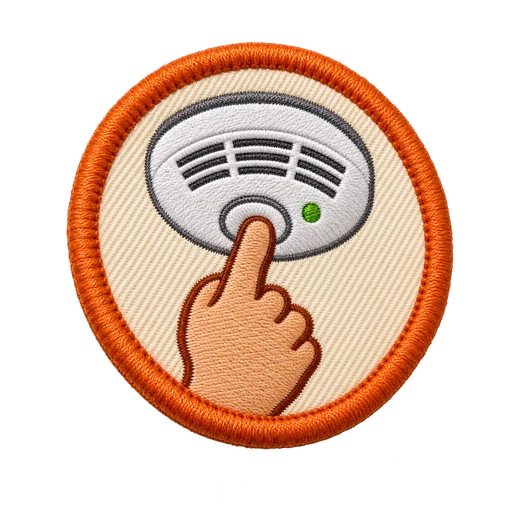
That is why medals and progress are only interesting if they help people feel that small actions really count.
04 It is easy to build this wrong
Gamification can also backfire.
If everything earns points, the points lose their meaning.
If activity in the app matters more than action away from the screen, the system is measuring the wrong thing.
If people feel ashamed for falling out of the rhythm, it can become harder to come back.
If medals start to look like proof of safety, we are saying more than we have grounds for.
That is why we are careful.
Points and medals can be useful.
But they can also trivialise something serious if they are used the wrong way.
The points must never matter more than the reason they exist.
05 Sometimes the right action is to ask for help
Not every problem is solved by knowing more.
Think of someone who lives alone.
The smoke alarm needs a new battery.
They know it.
They understand why it matters.
But they cannot safely reach up to change it.
Then the problem is not necessarily a lack of awareness.
Nor is it a lack of will.
They need a hand.
Perhaps a neighbour three doors down would gladly have helped.
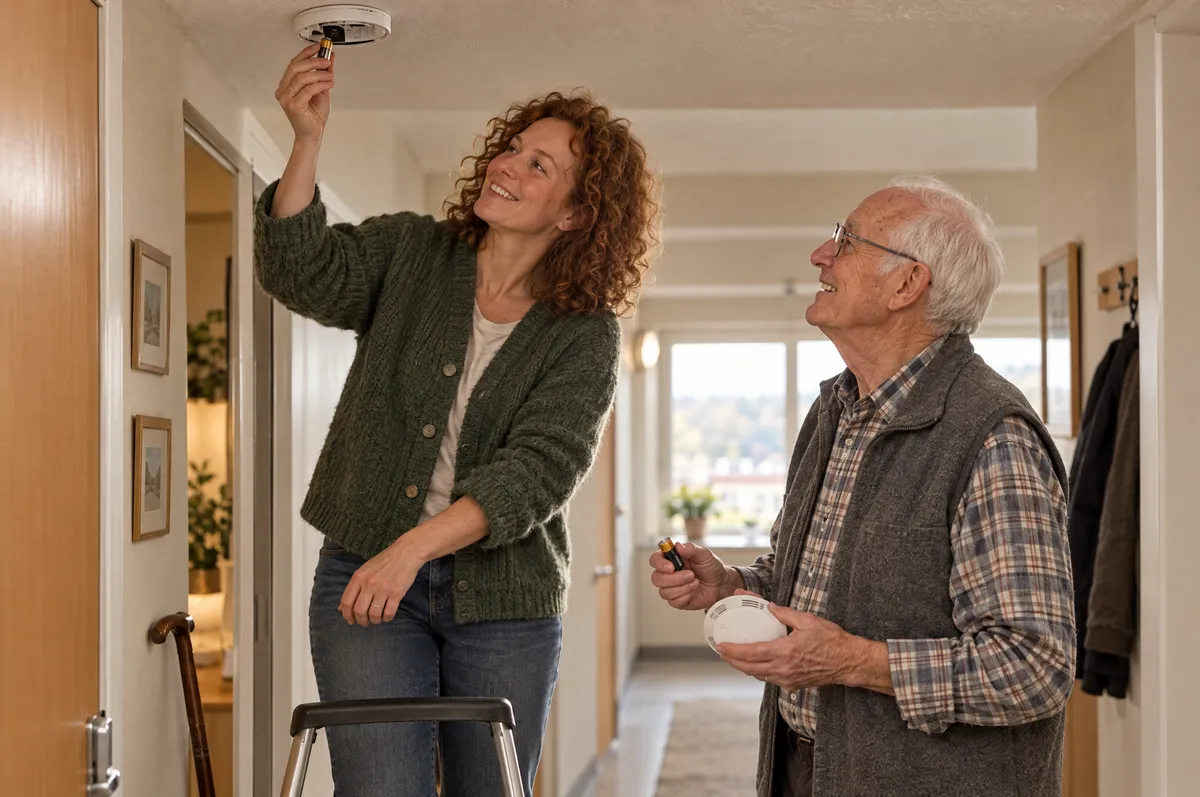
Perhaps a family member can do it.
Perhaps it really does take a professional.
That makes a bigger question interesting:
What if good prevention is not only about what you do yourself, but also about how easy it is to ask for help, and to lend a hand when others need it?
Sometimes the right action is to do something yourself.
At other times the right action is to make sure someone else can help.
Both can be good prevention.
06 We are rarely just one role
The same person can be an employee at work.
- A resident at home.
- Board chair of the housing cooperative.
- A neighbour.
- A parent.
- A daughter.
- An uncle.
Nor does knowledge necessarily stay where it was learned.
Someone who learns at work how a smoke alarm should be tested can take that understanding home.
Someone who learns something at home may suddenly notice something at the cabin.
Someone who has done something themselves a few times may be able to help someone else.
This is where an ecosystem becomes more interesting than an app on its own.
The same person meets FireHub at home, at work and on the board, and what you learn in one place comes with you.
Not because everyone should compete.
But because it may become easier to:
- learn
- do
- repeat
- ask for help
- help others
It is a direction we want to understand better.
Not a result we can already claim.
07 The medal should not be the goal
If someone tests the smoke alarm once just to get a medal and never thinks about it again, we have hardly achieved much.
If, over time, the same action becomes:
«It's just something I do»
then it starts to get interesting.
This is one of the things we are trying to understand through Project Zero.
Can technology make the right action a little easier to start?
Can visible progress make it a little more satisfying to keep going?
Can knowledge, action and feedback be more closely connected?
Can people help each other more easily when that is what is really needed?
And can we do it without pressure, shame or false reassurance?
Those are the questions behind the XP and medals in FireHub.
Not how many points we manage to hand out.
08 How do we know if it works
It has to be measured by what happens outside the points system.
Not how much XP we hand out.
Not how many medals people receive.
Not how many times someone opens the app.
But:
- Are more people testing their smoke alarms?
- Do they repeat the action when it is relevant?
- Are more people following up what they find?
- Is knowledge turned into concrete action?
- Do people ask for help when they need it?
- Do more people lend a hand when others need help?
Only when questions like these can be answered can we begin to say what progress actually contributes.
Until then, XP, medals and visible progress are tools we are investigating.
The goal is not more points.