
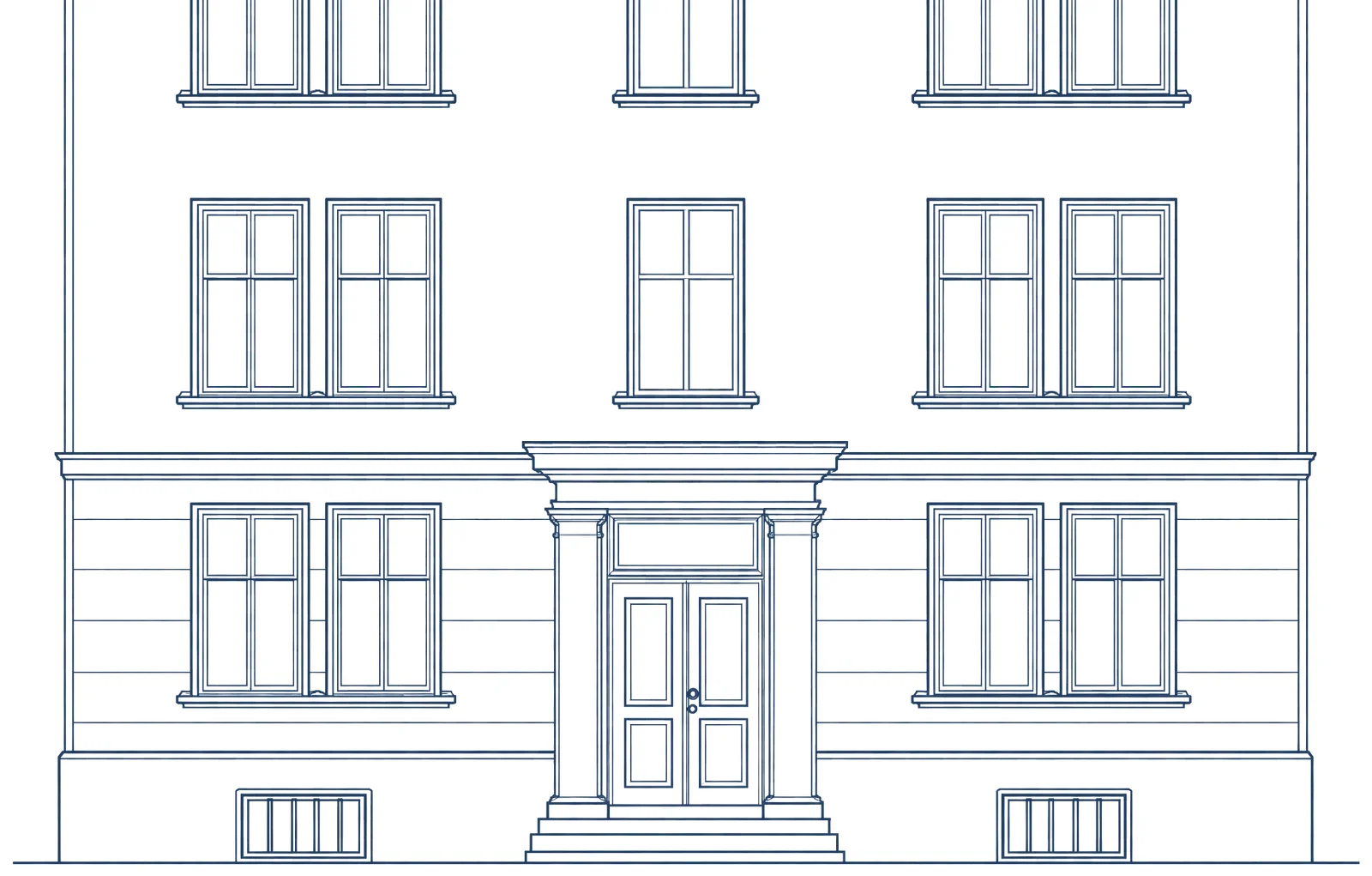
The building stays. The people change
A building can stand for centuries. The board, the tenants and the suppliers around it change far more often. The documents can stay. The understanding of them does not always follow.
FireHub is made so that the understanding stays in the building when the people change.
Project Zero is our work on one question: why does fire prevention slip, when everyone knows it matters? The direction is zero lives lost to fire.
In this article
01 The building stays
A building can stand for centuries.
Much of the building stock we already have was built generations ago. These are buildings we will go on living and working in.
We cannot solve this by replacing everything old with something new.
Fire prevention has to work in the buildings we actually have.
Old buildings are not necessarily bad buildings. But they may have been built on different assumptions than new ones, and they change over the years.
They are rebuilt. Their use changes. Technical systems are added. New knowledge arrives.
02 The people change
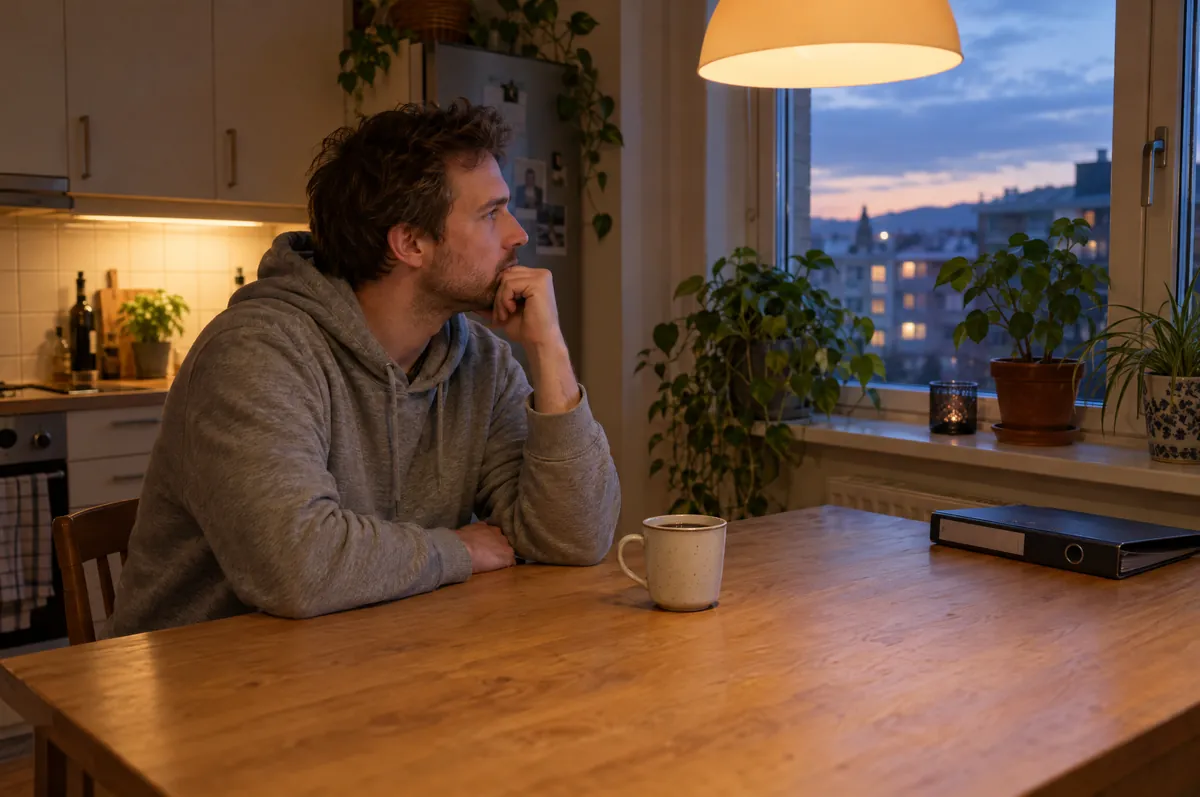
And the people around the building change even faster.
Board chairs are replaced. Tenants move. Employees leave. Suppliers change. Businesses change. New people arrive.
The documents may still be there.
But the reasons behind the decisions may be gone.
What was once obvious to one person can be completely unknown to the next.
03 The document is not the understanding
In Norway, as in many other countries, there are regulations, inspections, checks, campaigns, guidance, courses and professionals.
There is a great deal of knowledge about what can prevent fire.
But access to information is not the same as it being understood, remembered or used in the right context.
An inspection report can sit in a folder.A deviation can sit in a system.A supplier can know what was done.A board can have ordered a risk assessment.An employee can have completed a course.
All of this can be correct, and the connection can still disappear.
Who knew about the matter? Why was the measure chosen? What was still unresolved? What was the assessment based on? Who was to follow up next?
Information can stay behind even as understanding disappears.
Over time, fire safety becomes an archive of individual events, not a living overview.
04 Not all sources carry the same weight
Prevention is not only about knowing what can go wrong. It is about reducing the likelihood that it happens, and limiting the consequences if it happens anyway. In DSB's guidance to Forskrift om brannforebygging, the owner's systematic safety work is described as exactly this: work to ensure that the building is inspected, maintained and upgraded so that the likelihood of fire is reduced and the consequences are as small as possible if a fire breaks out.
That is why fire safety needs a professional hierarchy. The fire safety concept and the documented assumptions for the building must carry more weight than general advice. A supplier report must be understood in light of what the installation is actually meant to cover. A self-inspection must be linked to the right area, the right role and the right risk. A system that mixes everything together without showing what governs does not help the user enough.
Without context, data can create a false sense of security. A green dot in a system means little if nobody knows what it is based on. A closed task means little if the measure did not actually resolve the risk. An inspection report means little if the findings were never turned into responsibility, deadlines and follow-up.
05 Keeping meaning, not just files
That is why good fire prevention has to keep more than files.
It has to keep the understanding of the building through change.
FireHub is built around this insight. It should keep not only the documents but the context they belong to. FireHub reads what exists, links information to the right building and context, and makes it visible when something is missing, unclear or still needs follow-up: that a deviation keeps recurring, that a report lacks follow-up, that a role is unclear, or that the actual use no longer resembles what the building was originally assessed for.
It means important information does not disappear when a board chair is replaced, a caretaker leaves, a supplier changes or a tenant rebuilds the premises.
- The board chair is replaced
- The caretaker leaves
- The supplier changes
- A tenant converts the premises
That does not make the owner less responsible. It makes the responsibility clearer. It does not replace professionals. It makes the professional basis easier to use. And it does not remove the need for inspection, but makes inspection more meaningful because it becomes part of a larger whole.
Good fire prevention is rarely one big decision. It is many small decisions made correctly, often enough, by the right people. To achieve that, a building needs more than good advice.
It needs a system that remembers, explains and follows up.
Sources
- DSB, veiledning til forskrift om brannforebygging
- Lovdata, forskrift om brannforebygging
- DSB, systematisk sikkerhetsarbeid
- DSB, regelverk og veiledning for brannforebygging
- DiBK, TEK17 kapittel 11, sikkerhet ved brann
- Lovdata, internkontrollforskriften
- SSB, table 06266: Dwellings by type of building and year of construction
- City of Oslo, Fire safety in older apartment buildings
- SCB, Housing stock 31 December 2024
- SCB, table BO0104T02: Number of dwellings by region, type of building and period of construction